

What Is a Backlink?
Last updated 15 August 2026
Guide
A hyperlink from one site to another. Search engines and AI systems treat it as a vote of confidence, and who's voting matters far more than how many votes you collect.
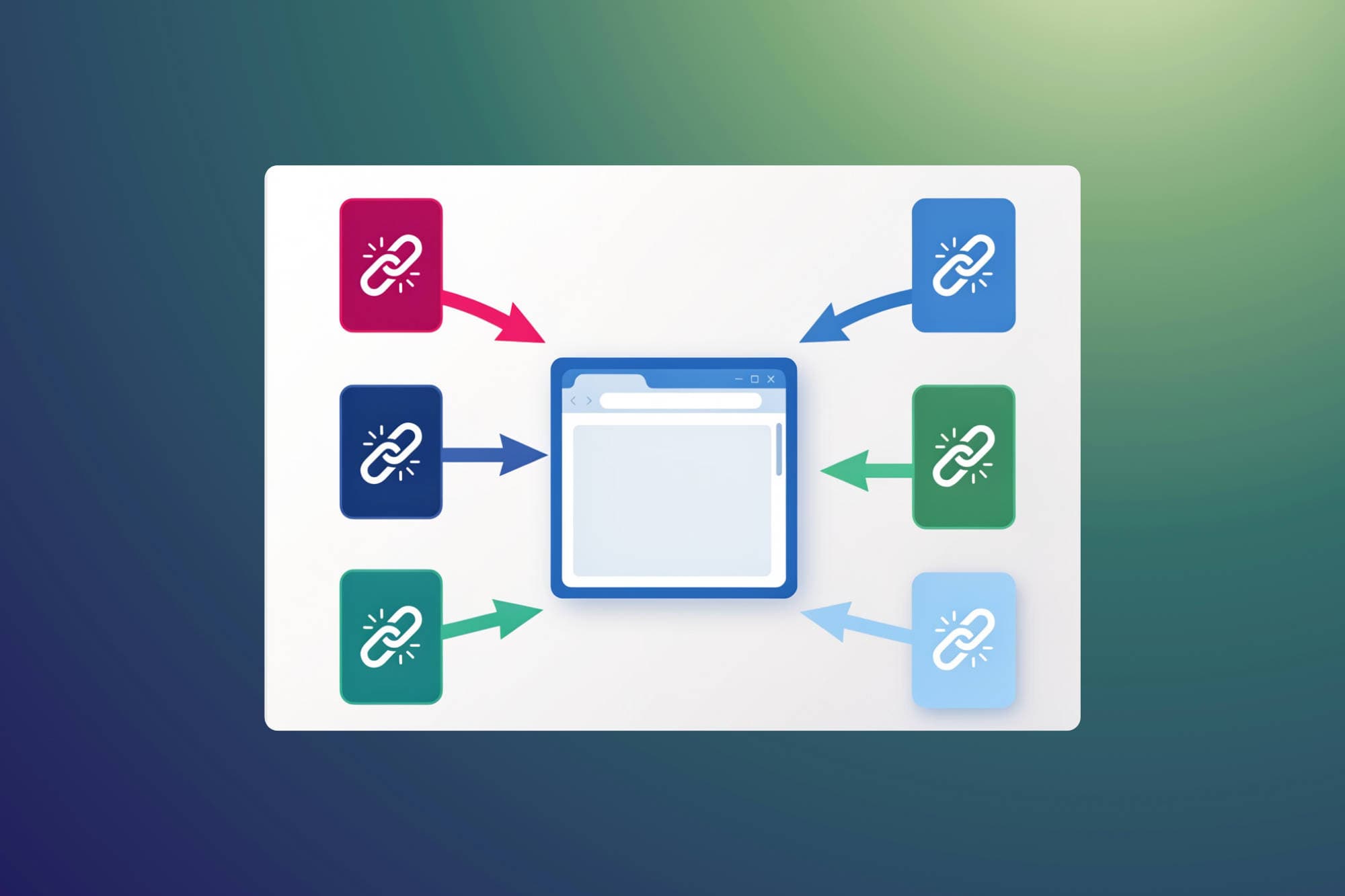
A backlink is a hyperlink from one website pointing to another. When Site A links to Site B, Site B has earned a backlink. Search engines and AI systems treat these links as votes of confidence, and the quality of who's voting matters far more than how many votes you collect.
That single idea, quality over quantity, is the whole game. A link from a site that's relevant to your topic and trusted in its niche can do more for you than a hundred links from random directories or comment sections.
Why backlinks exist and why they matter
Search engines can't ask humans which pages are trustworthy, so they infer it from the structure of the web itself. Google's original PageRank algorithm, described in the 1998 paper by Larry Page and Sergey Brin, treated each link as a signal of endorsement and distributed authority across the link graph accordingly. That basic mechanic, updated many times since, still underlies how Google ranks pages today.
Ahrefs analysed roughly a billion web pages in a widely cited 2015 study and found that most pages received zero organic traffic from Google, and the single biggest differentiator between pages that ranked and pages that didn't was the number of unique domains linking to them, not the raw count of links. That distinction matters: ten links from ten different websites tend to outperform a hundred links from the same website.
Backlinks now do double duty. They still influence traditional search rankings, but they also shape what large language models learn to associate with a brand. When ChatGPT, Claude or Perplexity are trained or grounded on web data, the sites that get cited, linked to and referenced repeatedly across the web are the ones that show up as trustworthy sources in AI-generated answers. A product with almost no external mentions is invisible to both systems at once.
What makes a backlink valuable
- Relevance — a link from a site covering the same topic or industry signals real editorial context. A link from an unrelated site (say, a recipe blog linking to a project management tool) looks arbitrary to a search engine, even if the site itself is reputable.
- Authority of the linking domain — sites with their own strong backlink profiles, real traffic and history pass along more credibility. This is often approximated by metrics like Domain Rating (Ahrefs) or Domain Authority (Moz), though these are third-party estimates, not figures Google itself publishes.
- Placement on the page — a link embedded in the body of an article, surrounded by related text, is worth more than a link buried in a footer or sidebar. Search engines read the surrounding words to understand context.
- Anchor text — the clickable words matter. A link with descriptive anchor text (“compare project management tools”) tells search engines more about the destination page than a bare “click here”.
- Follow vs nofollow — a rel="nofollow" or rel="sponsored" attribute tells search engines not to pass ranking credit through the link. Nofollow links can still drive real traffic and visibility, but they don't directly boost rankings the way followed links do.
- Naturalness — links that appear as part of genuine content, not as part of an obvious link exchange or paid scheme, hold up better over time and don't create risk of a manual penalty.
How backlinks earn AI citations, not just rankings
Traditional SEO cares about link equity flowing through a graph. GEO (Generative Engine Optimisation) cares about something slightly different: whether a model has encountered your brand, your product and your claims often enough, from enough independent sources, to state them confidently in an answer.
This means a smaller number of well-placed, topically relevant mentions on respected sites in your niche can matter more for AI visibility than a large volume of generic links. If an AI assistant is asked “what's the best tool for X” and your product has been discussed, linked to and described consistently across a handful of credible sites, it has multiple corroborating data points to draw from. If your only web presence is your own homepage, there's nothing for the model to cross-reference.
This is one reason distribution now matters as much as content creation. Writing a great article is necessary but not sufficient. It needs to get picked up, linked to and referenced elsewhere for either search engines or AI systems to treat it as evidence rather than a claim from a single interested party.
How to actually earn backlinks
There's no shortcut around the fact that backlinks have to be earned or built deliberately. A few approaches that hold up.
- Manual outreach — find sites already covering your space, pitch a genuinely useful resource (data, a tool, an original analysis) and ask for a link where it fits their existing content. This is slow and has a low hit rate, but the links it produces tend to be high quality because a real editor chose to include them.
- Content marketing — publish something worth citing: an original study, a well-researched guide, a free tool. Content that provides a data point other writers want to reference (a statistic, a benchmark, a definition) attracts links passively, because people cite sources instead of restating claims themselves.
- Digital PR — getting quoted in industry roundups, “best of” listicles or journalist queries (HARO-style platforms) produces links from established media and trade publications, which tend to carry strong topical authority.
- Vetted backlink networks — rather than cold-pitching strangers, some founders exchange contextual links within a curated group of relevant, active sites. The value here depends entirely on vetting: a network of unrelated or low-quality sites does nothing, while a network of genuinely relevant startups and tools in adjacent categories can produce links that read naturally to both search engines and human readers. Placement matters as much as the network - these should be ordinary followed links in the body of an article, not nofollow or sponsored tags that pass no ranking credit.
This is the part of link building most solo founders underinvest in, mainly because outreach is time-consuming and most people don't have an existing content library to leverage. Geograph approaches this directly: alongside monitoring Reddit for relevant conversations and drafting AI-optimised articles, it maintains a backlink network among vetted member sites so that new content can pick up contextual, relevant links rather than sitting on an island with zero external signal. Links are placed inline in the body of the article as standard followed links, with no nofollow or sponsored attribute, because a link that passes no credit defeats the point. Because the same system also tracks whether AI assistants start citing your product afterwards, you can see whether a given link or article actually moved the needle rather than guessing.
Common mistakes that waste link-building effort
- Chasing volume over relevance — a hundred low-quality directory links do less than five links from sites your actual customers read.
- Ignoring anchor text diversity — using the exact same anchor text on every link looks manipulative to search engines and can trigger algorithmic scrutiny (this pattern was directly targeted by Google's Penguin update in 2012).
- Buying links from obviously low-quality networks — Google's Webmaster Guidelines explicitly list paid links intended to manipulate rankings as a violation that can result in a manual action.
- Treating link building as a one-time project — link profiles decay as pages get removed, sites shut down or content goes stale. Ongoing acquisition, even a slow and steady trickle, outperforms a single burst followed by nothing.
- Forgetting AI citation entirely — a link strategy built only around Google rankings misses half the current opportunity. The sites and mentions that help you rank are frequently the same ones that get scraped into the corpora AI assistants draw from, so the two efforts aren't actually separate anymore.
The specific takeaway
If you're a founder with a handful of backlinks or none at all, don't start by mass-emailing bloggers for links. Start by identifying five to ten sites your actual customers already read, and figure out what genuinely useful thing you could offer them (a data point, a tool, a quote). A tool like Geograph can start earning you backlinks on autopilot - it's the difference that shows up when someone asks ChatGPT for the best tool in your category and your product is, or isn't, part of the answer.
Frequently asked questions
- Do nofollow links help SEO at all?
- They don't pass direct ranking credit, but they can drive referral traffic, brand exposure and indirect signals (people searching your brand name after seeing it). Google has also said it may use nofollow links as a signal in aggregate, even though it doesn't pass PageRank through them the way followed links do.
- How many backlinks does a page need to rank?
- There's no fixed number. It depends on how competitive the topic is and how strong the linking domains are. A single link from a highly authoritative, topically relevant source can outperform dozens of weak ones.
- Can I get backlinks without outreach?
- Yes, through content that naturally attracts citations (original data, tools or guides) and through participation in relevant communities like Reddit, where organic mentions of your product can eventually turn into links as people write about it elsewhere.
- Is link building still worth it with AI search growing?
- More than ever. AI assistants build their sense of “trustworthy” sources partly from the same signals search engines have long used: who links to whom, and how consistently a brand shows up across independent sources.
- What's the difference between a backlink and an internal link?
- A backlink comes from a different domain than the page it points to. An internal link connects two pages on the same site. Both matter, but backlinks carry outside credibility that internal links can't replicate.
Start getting found on AI, Google and Reddit
- 15 articles a month optimised for AI & search citation
- Get backlinks on autopilot from other members
- Real time Reddit monitoring with reply drafts to drive traffic and AI mentions
- Weekly deep site audits with a full report card, tracked over time
- All built to maximise AI mentions and search ranking
Pricing and figures mentioned are accurate as of publish (15 August 2026) and may have changed since - check each provider's site for current numbers.

Written by Toby Marshman